Showing posts with label Chinese. Show all posts

Thursday, April 18, 2013

Chinese tourism: Good, bad, backlash

 It might be the biggest phenomenon to hit the global travel industry since the invention of commercial flight -- Chinese tourism.


The figures are incredible.


By 2015, 100 million Chinese will pack their bags to travel abroad, according to a rert from the UN World Tourism Organization.


In 2012, Chinese overtook Americans and Germans as the world's top international tourism spenders, with 83 million people spending a record US$102 billion on international tourism.


Chinese travelers the world's biggest spenders


Pretty much any country with "Approved Destination Status" -- a bilateral tourism arrangement with China -- has remarkable numbers to throw out on Chinese tourism growth, from the United States to France.


The figures are even more dramatic closer to home. South Korea recently reported that in February, for the first time ever, Chinese tourists overtook Japanese tourists in terms of arrival numbers.


Hong Kong and Thailand cite similar growth.


Great, they're coming! (Now what do we do?)


In response to the boom, global travel operators have been frantically adapting their offerings -- hotels in particular.


Politician throws computers at airport


Hoteliers cater to Chinese tourists


Luxury shops cater to Chinese tourists


Mei Zhang, founder and CEO of Beijing-based travel company WildChina, deals with both inbound and outbound tourists. She says though there are still teething problems, the world's luxury travel industry is taking positive steps toward making Chinese tourists feel at home.


"The Ritz Paris (currently under renovation) has a Chinese concierge," says Zhang. "Shangri-La and the Peninsula -- both considered by Chinese to be somewhat Asian brands -- have restaurants serving Chinese breakfast. They've adjusted their menus.


"In New York, at the Waldorf Astoria, if they know it's a Chinese person arriving they'll give them a tea kettle and a pair of slippers.


"The luxury stores in Paris have equipped themselves with Chinese-speaking staff. Similarly in Asia-Pacific, I was recently at the Four Seasons in Indonesia and they have Chinese menus, guides and guest ambassadors."


It's still not enough, says Dr. Wolfgang Georg Arlt, director of the privately run China Outbound Tourism Research Institute (COTRI), which has offices in Beijing and Heide, Germany.


He says the global travel industry needs to stop relying on old stereotypes about the Chinese and actually listen to what they want.


"If you look at surveys and forums in China, the majority of Chinese people are not satisfied with the service they get when they travel -- especially outside East and Southeast Asia, in areas where there are not as many Chinese, like in Europe or North America," he says.


The solution: Social media


Chinese tourists often say they feel treated like second class people, even when they spend a lot of money.
Dr. Wolfgang Georg Arlt, China Outbound Tourism Research Institute


The problem, he adds, is that even when management understands that Chinese outbound tourism is the largest and potentially most important market in the world, this awareness isn't manifesting itself on the front line with service staff who are actually in touch with customers.


"Chinese tourists often say they feel treated like second class people, even when they spend a lot of money," says Arlt.


"When I go to a hotel and have to wait five minutes before I get my key, I never think, 'Oh, they're doing this to me because I'm German.' I think, 'Maybe they need more staff.'


"But Chinese view it as, 'Aha! I knew it, they're making me wait because I'm Chinese and they think they don't need to treat me the same way as the Westerners.'"


This means service providers face the challenge of making Chinese guests feel welcome and comfortable, he says.


Simply adding congee to the breakfast table isn't going to cut it.


The solution, he says, lies in social media.


"There are millions of Chinese everyday writing about their travel experiences and things they don't like," says Arlt.


"They're keen on discussing and sharing their experiences online. It's all there. You just need to have someone Chinese do the data mining."


'New Chinese tourist'


The industry is adapting, acknowledges Arlt, but many big players have yet to recognize that the demographics are quickly shifting.


"The problem is the international tourism industry is slowly catching up with the idea that the Chinese traveler is coming, but in fact the Chinese traveler is already here and they're segmenting," says Arlt.


"You have two kinds of tourists. Package tourists, who are usually first time travelers. They do the eight European countries in 10 days, ticking off the sites. For them the most important thing is to get that shot in front of the Eiffel Tower."


This type of tourist appreciates the congee and hot water kettle, he says.


"But you have a growing number of what we call the 'new Chinese tourist.' People who are better educated, with more travel experience -- most have been students abroad so they know their way around. Self-organized."


It's these tourists who are looking to try the local cuisine and want new experiences, he says, and resent being stereotyped as an ignorant traveler from the countryside who can't live without his instant noodles.


"I think we're maturing in all kinds of areas very fast, be it taste of destination or taste of foreign cuisine," agrees WildChina's Zhang.


"But the majority of [Chinese] tourists still need to develop. One problem area is advance planning. We have few clients who plan six months ahead. So they end up giving last minute requests for Michelin-starred dinners and they just can't get in.


"Then they become unhappy because they think money can get anything. The game in the international market is slightly different. So advance planning is something they're learning."


Tourists behaving badly


No discussion of Chinese tourism would be complete without addressing the backlash now making the rounds in some sectors of the travel industry.


This is the fun for them. You toss some coins and Western people dance for you.
Dr. Wolfgang Georg Arlt, China Outbound Tourism Research Institute


To put this into context, Zhang describes a popular urban legend about a wealthy Chinese tourist who entered a famous luxury boutique in Milan with a lit cigarette.


When asked to put out the cigarette, the woman replied that she'd buy 20 purses if she was allowed to smoke in the shop.


Next thing you know, the woman is handed an ashtray, and the boutique did indeed earn a nice profit that day.


Zhang says allowing that behavior is a double-edged sword.


"Rich Chinese tourists are pushing the boundaries and unfortunately some of these places are bending to their will," she says.


"Particularly the newly rich, who think, 'If I'm paying money then I'm God.'"


Arlt says Chinese are often proud of the fact that they're at the top of the wealth chain, given that the Cultural Revolution is still fresh the minds of people over 40.


"This has happened all in one generation," he says. "Many [Chinese tourists] have parents who didn't have shoes. All this growth happened so fast it's still in living memory.


"Now they're showing the world and themselves: 'I'm strong, I can go spend US$5,000 for nothing, just for my pleasure.'"


And they're more than happy to rub it in the West's face, he adds.


"The Chinese have the idea that since the Opium Wars they've been oppressed and looked down on, so now they're coming back rich," Arlt says.


"This is the fun for them. You toss some coins and Western people dance for you."


Anti-tourist sentiment


The scene is even more charged with emotion in Hong Kong, where mainland Chinese tourists face harsh resentment for a number of issues. Clashes between locals and tourists on public transportation and in restaurants have been caught on video, rapidly gone viral on the Internet and are regular press fodder.


Hong Kong Airlines has even taught its cabin crew kung fu to deal with drunken passengers flying to and from the mainland in light of what it says are continuous issues.


Dr. Yong Chen of Hong Kong Polytechnic University, who specializes in Chinese outbound tourism, says all the bad press needs to be taken in context, given how many mainlanders are heading south of the border.


"There were 48 million tourists who came to Hong Kong last year and more than 70 percent of them were Chinese tourists," he says.


"There's no other country with such a high market share in the world."


When posted on the Internet, small, individual problems, like shouting matches on subway trains, have a way of transcending borders.


"Travel is a way of communication between cultures," he says. "Tourism will help people to get better and learn. It's a new experience for them."


Liu Zhen-xiu, a mother from Tianjin visiting Hong Kong with her young daughter, says she notices the resentment.


"We usually stay in five-star hotels, so people in the service industry of course have to be polite and friendly to us," she says.


"I haven't gotten into a situation where I was treated differently or rudely, but I can feel that local people do not welcome mainland tourists."


Learning global cultures


Fauna (who didn't want her last name published) is the founder of popular English-language blog ChinaSMACK, which analyzes and translates online reaction to popular news stories in China.


If a non-Chinese points fingers at this kind of behavior, almost all Chinese feel very defensive. They will say, 'That's racist against Chinese.
Mei Zhang, WildChina


Responses to stories of Chinese behaving badly while traveling are mixed among China's online community, she says.


"If the focus is on the behavior of the mainland tourist, usually the reaction from mainland Chinese netizens is embarrassment," she says.


"If the focus is on criticisms of mainland Chinese by Hong Kong people or foreigners, then often there is defensiveness -- but also a lot of embarrassment -- and counter-criticism."


Zhang has a similar view, noting that the younger generation and wealthier Chinese are usually unhappy with those who damage the image of Chinese travelers worldwide.


"On the other hand, there is this strong sense of patriotism and a bit of insecurity about our national identity," she says.


"If a non-Chinese points fingers at this kind of behavior, almost all Chinese feel very defensive. They will say, 'That's racist against Chinese.'


"There's the idea that, 'It's my dirty laundry, I know it's smelly and it's OK for me to criticize it, but it's not OK for you to say anything.'"


Zhang says it will take time for attitudes to change, as more Chinese grow accustomed to global cultures.


Naicy Zhang, a Chinese tourist visiting Hong Kong from Dongguan, agrees.


"People are generally helpful, but I know there are differences in cultures between Chinese tourists and others," she says.


"The people here in Hong Kong, for example, are more polite and self-disciplined, they queue up for everything. But in China, no one will ever queue up and they will fight for things. If you wait, you will be left with nothing.


"It's true that Chinese tourists may not understand the local rules and customs in the beginning and make mistakes. But we will learn."


Arlt says too many locals are seeing only the negative side of Chinese tourism.


"The busloads of Chinese people running around and taking a lot of photos and making noise and behaving a bit stupid because this is the first time they're traveling -- these are the more visible tourists," says Arlt.


"The people who have been traveling 10 to 15 years or studied abroad and speak perfect English -- they blend in, so we don't even identify them as Chinese. For the tourism industry, these are the interesting customers."


CNN's Hiufu Wong contributed to this report


Chinese tourists splash the most cash

Chinese travelers are now the top source of tourism cash in the world, according to a new report by the United Nations World Tourism Organization (UNWTO).


Boosted by a rising Chinese currency, Chinese travelers spent a record US$102 billion on international tourism in 2012, a 40 percent rise from US$73 billion in 2011.


a href='http://edition.cnn.com/2013/04/09/travel/chinese-tourism-impact/index.html?hpt=hp_mid'>Chinese tourism: The good, the bad, the backlash


The results fall right in line with China's outbound tourism growth over the last 10 years.


The UNWTO says the volume of international trips by Chinese travelers grew from 10 million in 2000 to 83 million in 2012, making it the world's fastest-growing market.


So what's behind the increase?


The UNWTO credits rapid urbanization, rising disposable incomes and the relaxation of government restrictions on foreign travel.


"In 2005 China ranked seventh in international tourism expenditure, and has since successively overtaken Italy, Japan, France and the United Kingdom," says the report.


"With the 2012 surge, China leaped to first place, surpassing both top spender Germany and second largest spender United States (both close to US$84 billion in 2012)."


Though the report did not break down spending per trip amongst international travelers, calculating total spend by number of trips suggests Chinese travelers averaged a spend of $1,230 per trip.


By 2015, 100 million Chinese will travel abroad, a benchmark originally forecast for 2020, according to the UNWTO.


And now that China's State Council has crafted a landmark plan to kick start Chinese outbound tourism even further, expect more phenomenal growth figures.


It is dubbed the "Outline for National Tourism and Leisure (2013-2020)" and is a roadmap for restructuring the current paid leave system across China with an aim to encourage governmental agencies, social organizations, enterprises and public institutions to promote the use of leave days. Importantly, it also gives Chinese workers more freedom and flexibility of where and when to travel.


It's all about shopping


And what do Chinese travelers prefer to do on their trips?


According to Dr. Yong Chen of Hong Kong Polytechnic University who specializes in Chinese outbound tourism, unlike other global travelers, Chinese tourists focus mainly on shopping.


"It is the most prominent difference and more evidential in recent years," says Chen.


"If you look at Chinese tourists 10 years ago, they will mainly buy souvenirs. Nowadays, they want to buy luxury products in Italy or Paris like handbags and watches."


Dr. Wolfgang Georg Arlt, director of the China Outbound Tourism Research Institute (COTRI), agrees, saying shopping is one of the main drivers for Chinese tourists.


"Luxury goods are 20-30% cheaper in other global cities. If you plan to spend US$10,000 on shopping and only spend US$1,000 on airfare, it's much cheaper for Chinese tourists to fly abroad to shop."


Traveling is also a form of soft power, he adds, so it's only natural for the Chinese government to support its citizens to head abroad.


"For Chinese people the United States is the only competitor left," he says.


"They have an interest in the model for capitalistic development and want to see what they can learn so they can overtake and become number one."


Chinese are very proud of the fact that they are traveling, he adds, given the Cultural Revolution is still fresh the minds of people over 40.


"This happened all in one generation," he says. "Many have parents who didn't have shoes. All this growth happened so fast it's still in living memory.


"Now they're showing the world and themselves: 'I'm strong, I can go spend US$5,000 for nothing, just my pleasure.'"


Other hot markets


Other emerging markets to increase tourism spending abroad over the past decade include Russia, which saw an increase of 32 percent in 2012 to US$43 billion, bringing it from seventh to fifth place in the international tourism spending rankings.


"Emerging economies continue to lead growth in tourism demand," said UNWTO Secretary-General Taleb Rifai in a statement.


"The impressive growth of tourism expenditure from China and Russia reflects the entry into the tourism market of a growing middle class from these countries, which will surely continue to change the map of world tourism."


Meanwhile, traditionally hot outbound tourism markets, usually growing at a slower pace, also posted positive results, says the report.


Spending on travel abroad from Germany and the United States grew by 6% each.


Spending from the UK grew by 4% and the country retained its fourth place spot in the list of major source markets. Expenditure by Canada grew by 7%, while both Australia and Japan grew by 3%.


The only markets in the top 10 to record a decline in international tourism spending were France (down 6%) and Italy (minus 1%.)


Top international tourism spenders in 2012


1. China -- US$102 billion

2. Germany -- US$83.8 billion

3. United States -- US$83.7 billion

4. United Kingdom -- US$52.3 billion

5. Russian Federation -- US$42.8 billion

6. France -- US$38.1 billion

7. Canada -- US$35.2 billion

8. Japan -- US$28.1 billion

9. Australia -- US$27.6 billion

10. Italy -- US$26.2 billion

11. Singapore -- US$22.4 billion

12. Brazil -- US$22.2 billion

13. Belgium -- US$21.7

14. Hong Kong (China) -- US$20.5 billion

15. Netherlands -- US$20.2 billion


-- source: UNWTO.


CNN's Hiufu Wong contributed to this story


Wednesday, April 17, 2013

Chinese Art in Kansas City

A new exhibit of centuries-old paintings stored in Kansas City, Missouri and Lawrence, Kansas are now on display at the Nelson-Atkins Museum of Art in Kansas City.

From The Kansas City Star:


The most enchanting show of the summer is tucked away in the Chinese paintings gallery at the Nelson-Atkins Museum of Art. 

“Faces From China’s Past” is a walk-in album of charming portraits from the 16th to the 19th centuries. 

Their subjects — imposing matrons and fetching young women, stately ancestors and learned men — seem remote from us in customs and dress, yet seeing them enjoy their pets and favorite pastimes in lovely gardens and elegant interiors, one immediately feels a sense of kinship. 

And there’s just enough of a “boy meets girl” theme to keep things interesting. 

That notion gets quite an airing in a series of exquisite illustrations for an erotic novel, “The Plum in the Golden Vase,” chronicling the amorous adventures of a rich merchant, Master Ximen. He’s a randy and at times cruel character, not above climbing a garden wall to have a tryst with his brother’s wife or punishing a wayward concubine with a whip. 

Nearby, “Listening to the Qin by Candlelight,” a 17th-century piece showing a man playing the ancient stringed instrument for a female companion, presents a much more civilized approach to romance. 

Drawn from the collections of the Nelson and the Spencer Museum of Art in Lawrence, the artworks in this show were made for enjoyment and commemoration by mostly unknown artists. And many of the works have languished in storage for years. 

“Scholars weren’t interested in this type of painting; it’s not what Chinese consider mainstream,” said Colin Mackenzie, the Nelson’s senior curator of Chinese painting. The mainstream is landscape painting, he said, “created by the educated elite to express a philosophical view of art.” 


Read On  
The Nelson-Atkins Museum has one of the finest collections of Chinese art in the world. Here is a summary of the Nelson-Atkins' permanent Chinese collection:

Since it opened in 1933, The Nelson-Atkins Museum of Art has actively collected, preserved, studied and exhibited works of Chinese art. Even before the Museum was built, its benefactors planned to include in it the first major gallery in America devoted solely to Chinese art. As early as 1930, the focus was to build a collection that would represent China’s highest achievements in every medium and from every historical period. As a result, the Chinese collection is one of the finest in the world. 

With more than 7,500 works of high quality, the Chinese collection comprises masterpieces from every historical stage and in every medium of China’s artistic activity – from Neolithic times to the 20th century. 

The collection of Chinese paintings is one of the best outside Asia particularly in the rarest and desirable period of early Chinese landscapes, the 10th through 13th centuries C.E. The richness of nature’s nuances can be seen in Xu Daoning’s Fisherman’s Evening Song, arguably the greatest surviving Northern Song landscape handscroll. Later period works include exceptional Ming and Qing paintings, such as Shitao’s A Landscape Album for Liu Shitou (K'u-kua miao-t'i). 

As a pioneer in collecting Ming furniture, the Museum’s collection is virtually unrivaled outside of China. The comprehensive ceramics collection spans 5,000 years and includes both sculptures and wares that chronicle the great epochs of Chinese ceramic innovations. 

Buddhist sculpture and wall paintings range from the Northern Dynasties to the Qing period and offer some of the best examples of Buddhist art in the west. A jewel of the Museum is the Chinese Temple Gallery (Gallery 230). Among Buddhist statues exhibited here is an 11th/12th-century C.E. polychrome wooden Avalokiteshvara, Seated Guanyin Bodhisattva, internationally heralded as the finest sculpture of its kind outside China.
Qian and I have been to the Nelson, which has free admission, several times in the three years we've been in Kansas City. The whole museum, on top of the Chinese collection, is just an awesome display.


The Nelson-Atkins Museum

The Chinese works of art are far superior to anything I ever saw in China. I haven't spent a lifetime checking out other cities' museums' Chinese collections, but I have to believe that the Nelson's is up there with any collection in the world.

If you ever find yourself in Kansas City, be sure to check out the Nelson-Atkins Museum's Chinese collection. Send me an email and I'll go with you. We can catch some BBQ after we see the museum too. Kansas City's BBQ, my favorites being Oklahoma Joe's and Jack Stack, is as good as it gets.

More on Chinese Art in Kansas City

Frequent commenter on this blog and blogger himself, Ramesh, in the last post I made on the Nelson-Atkins Museum's Journey Through Mountains and Rivers asked me, "Why Kansas City? Why does Kansas City have such a great Chinese art collection?"

My generic response was that Kansas City is a great arts town. With the Nelson-Atkins Museum, the Kauffman Center for the Performing Arts, and the Kemper Museum of Contemporary Art (among others), it's safe to say that Kansas City is punching above its weight in terms of world-class art per capita.

That's not the entire story, though. Earlier this week, I was looking up some information on the scrolls currently being displayed at the Nelson and came across, what I think, are more specific answers to Ramesh's questions.

I'm going to post an entire article from the site viamei.com. I normally wouldn't post the entirety of an article like this, but ViaMei - a website highlighting the Xi'an/Kansas City sister-city relationship - appears to be a defunct enterprise. Their last post was in 2007.

Here is an article giving a nice introduction to how and why Kansas City is home to one of the very top collections of ancient Chinese art in the world:

Ancient China Lives in America 

By Scott Stuart 


Kansas City is the gateway to Asia.

From where Asian art expert Marc F. Wilson sits in his position as Director and CEO of The Nelson-Atkins Museum of Art, this is not an audacious claim. Though situated in the center of the continent, Kansas City's Nelson-Atkins connects visitors with a comprehensive collection of treasures from China's long, unbroken artistic tradition spanning from Neolithic times to the 20th century.

Masterpieces among the museum's amazing collection of 7,500 works of Chinese art include:

- A polychrome wooden Avalokiteshvara, "Seated Guanyin Bodhisattva," possibly the best-preserved and most magnificent sculpture from this period of Chinese Buddhist art:


- A limestone frieze from the Longmen Grottoes, "Procession of the Empress as Donor with Her Court," whose counterpoint "Emperor as Donor" resides at the Metropolitan Museum of Art in New York:


- A painting from circa 1049, Xu Daoning's "Fisherman's Evening Song," scholars hail as perhaps the greatest Northern Song landscape handscroll in existence:


- A rare, nearly complete earthenware "Tomb Model of a House" from the Han dynasty (25 to 220 C.E.):


- A precious ritual disk, or bi, some consider the most beautiful piece of jade to have come out of China:


Scholarly superlatives aside, what can visitors to the Nelson-Atkins glean from their individual encounters with these rare masterpieces and how did this amazing collection of 7,500 works of Chinese art in every medium and from every historical period, including tomb figures, sculpture, porcelain, furniture and scroll paintings, come to the American Midwest in the first place?

The short answer to this last question lies in the person of Laurence Sickman (1906-1988), the Asian art specialist who advised the Nelson-Atkins on purchases of Far Eastern art when the museum's collection was being assembled in the 1930s. Acting as the museum's agent in Beijing, a young Sickman exercised a keen eye and a shrewd business sense to send Chinese art works to Kansas City. Sickman went on to become the first curator of Oriental art at the Nelson-Atkins, and led the museum as its second director, from 1953 to 1977. His book with Alexander Soper, The Art and Architecture of China, first printed in 1956, remains a classic work on the history of Chinese culture.

Sickman's legacy of collecting Chinese art of the highest quality is unmistakable in the Nelson-Atkins' holdings in two areas in which he specialized: ancient bronzes and Chinese paintings. A series of ceremonial bronze vessels, weapons and chariot fittings range from about 1200 to 500 B.C.E. The museum's collection of Chinese paintings is among the best outside of Asia, including Ming dynasty masterpieces by Shen Zhou, Wen Zhengming and Lu Zhi.

Although the entire collection of fine Chinese art cannot be on view at any one time, a handful of star works representing the highest achievements can convey the creative impulse, cultural context and visual solutions across the ages.

Seated majestically in a reconstructed Chinese temple in the Nelson-Atkins, "Seated Guanyin Bodhisattva," is the destination for pilgrims from around the world. This monumental image of the deity of compassion and mercy appeals to those within its gaze today, just as it would have in the 11th to early 12th centuries. Designed to make supplicants feel enlightened, beings were accessible to the living, the Guanyin's emotional approachability offers a sense of calm and inspiration.

"Procession of the Empress as Donor with Her Court" is from the Binyang Cave chapel at Longmen, Henan Province. Besides being important as a work of sculpture, the large, 7-by-9-foot limestone frieze reveals clues about Chinese painting techniques in this early period of Chinese Buddhist history. The composition of the eight figures and the modeling that provides maximum effect from light filtering in from the cave entrance demonstrates the great skill of the unknown sculptor. Its Kansas City installation, anchoring the museum's gallery of Early Chinese Buddhist sculpture, attempts to recreate this sense of directional light.

The handscroll format of "Fisherman's Evening Song" allows a close-up encounter with the viewer. Although nearly 7 feet long, the landscape scroll was meant to be seen only about 2 feet at a time. By focusing on a single section, the viewer can appreciate painter Xu Daoning's virtuosity with ink washes and directness of line. Taken as a whole, the 11th-century painting has been likened to a musical composition, with calm passages swelling to dramatic crescendos, expressing the overwhelming vastness of nature.

The jade "Ritual Disc with Dragon Motif" is among the best-known objects in the collections of the Nelson-Atkins. Although its exact function or meaning is lost to the ages, the delicate, 6 ?-inch bi is remarkable from a technical standpoint. Jade, which the ancient Chinese valued more than gold or jewels, is so hard that it must be ground instead of carved. The space between two rings of nearly transparent jade is filled with small, spiral bumps the size of kernels of grain. Two tigers on the outer rim befit this object's likely role in the grave of a great prince or statesman.

Besides promising a rewarding experience of visual enjoyment, the Chinese collection in The Nelson-Atkins Museum of Art invites a better understanding of human nature and the creative impulse to Western and non-Western visitor alike. Via the Nelson-Atkins -- in the words of Wilson, who began his career there as a Ford Foundation Fellow under the tutelage of Sickman -- Kansas City is the gateway to Asia.
There's still a lot I don't know or understand about the Nelson's collection of Chinese art and Kansas City's relationship with China in general. Seeing that I'm a China news/history/culture junkie living in the middle of America, these topics are something I'll probably be exploring more in depth as time passes.

I was born and raised in Kansas City. It's also where Qian and I have ended up after moving from Xi'an to the US in 2009. Kansas City isn't the most amazing place on Earth, but it's a surprisingly interesting place in a lot of respects and I'm proud of where I grew up and currently live. I'm excited to learn more about its relationship with my other favorite place on the globe - China.

I'll surely be posting whatever more I find on these topics here.

Monday, April 15, 2013

Top 10 Places to Spend Chinese New Year At

As Chinese New Year 2013  fast approaches, more and more people are now panicking to get those cheap air tickets to their desired destinations. Some haven’t decided where to go to yet, though. So to help, here are the top 10 cities where extravagance is the constant theme for the festivity:


1. Singapore


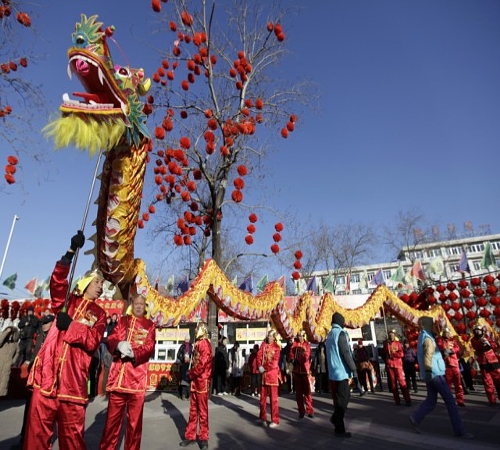
As the whole street of Chinatown gets lovely with the red and yellow lanterns hanging, it also gets lively as music booms aloud as dragon and lion dancers parade around. People are given two days of holidays so getting it on with the party is permissible. Drinks and food are overflowing during the celebration.

Sources:
* Singapore Playground
* Singapore.com - Chinatown
* Asianewsnet


2. Beijing


Of course, nothing beats the original. As the capital city of China, many opt to come to the city in time for the Chinese New Year. The event is at its best at where it originated, after all. Dragon and lion dances are performed around the metropolis, as people come together to feast over good food and companies.

Sources :
* Saisnanjing
* Thesavoia.com
* WildChina.com


3. Hong Kong


You are in for some great fun when you buy Hong Kong air tickets in time for the CNY. The whole city is basically illuminated with fireworks to welcome the New Year, and music is loud – really loud. The festival lasts for 15 days. That’s exciting, right?

Source:
* Caffeinated Traveller - What to Expect This Chinese New Year in Hong Kong?


4. Vietnam


Instead of celebrating CNY, Vietnam holds the Lunar New Year – which is practically a version of the Chinese event. It lasts for 3-4 days as people come home to be with their families to have fun. Locals will then commonly clean houses and go for makeovers. It’s their way of starting anew, and that’s what New Year is all about for them. Vietnam tours offer spectacular experiences you may want to try.

Source:
* Xinhuanet.com


5. Sydney


With its celebration centered on Chinatown and the Chinese Garden of Friendship in Darling Harbour, you can expect that the celebration is one of a kind in Sydney, Australia. Markets and food stalls are set up and parades are held to contribute to the festive atmosphere.

Sources:
* Smoothfm.com.au
* English.sina.com


6. Paris


It might be quite surprising but yes, Paris celebrates the Chinese New Year. In fact, it is to be anticipated because the city lights up in color as people in colorful costumes parade around to distribute luck among everyone. The fireworks displays are superb too!

Sources:
* Citizenside.com - Chinese New Year Celebration in Paris Town Hall
* iFashion Blog


7. Los Angeles (USA)


This big city in California is home to many Chinese communities. Thus, it is of no wonder why Chinese New Year is greatly celebrated there. You should look forward to the Golden Dragon Parade which flaunts colorful floats and marching bands that certainly livens up the atmosphere. It runs along North Broadway to Chinatown.

Source:
* Just Luxe


8. Helsinki (Finland)


This city in Finland sure knows how to escalate the fun during the Chinese New Year. Having signed an agreement with Beijing, Helsinki shows traditional lion, dragon and butterfly dances on its streets. There are also operas depicting different battle scenes in the Chinese history. Lots of Chinese markets are organized too!

Sources:
* Helsinkippusa
* CNY Stage Performance in Helsinki


9. London


In Leicester Square and Chinatown, people come together to witness acrobatic shows, dragon dances, and traditional performances from Chinese artists during the Chinese New Year. It is surely an interesting feat as it flaunts the majestic fusion of Oriental and European cultures.

Source:
* Visit London : Chinese New Year in London


10. San Francisco (USA)


It is almost two centuries ago since San Francisco included the Chinese New Year in its heritage. The celebration in the city is considered one of the longest in the world. Aside from the typical parade, San Francisco also holds the Chinese New Year Flower Fair and Chinatown Community Street Fair.

Sources:
* Party Earth - Chinese New Year Parade & Festival
* BuiPhotos

Saturday, April 13, 2013

Top 10 Places to Spend Chinese New Year At

As Chinese New Year 2013  fast approaches, more and more people are now panicking to get those cheap air tickets to their desired destinations. Some haven’t decided where to go to yet, though. So to help, here are the top 10 cities where extravagance is the constant theme for the festivity:


1. Singapore


As the whole street of Chinatown gets lovely with the red and yellow lanterns hanging, it also gets lively as music booms aloud as dragon and lion dancers parade around. People are given two days of holidays so getting it on with the party is permissible. Drinks and food are overflowing during the celebration.

Sources:
* Singapore Playground
* Singapore.com - Chinatown
* Asianewsnet


2. Beijing


Of course, nothing beats the original. As the capital city of China, many opt to come to the city in time for the Chinese New Year. The event is at its best at where it originated, after all. Dragon and lion dances are performed around the metropolis, as people come together to feast over good food and companies.

Sources :
* Saisnanjing
* Thesavoia.com
* WildChina.com


3. Hong Kong


You are in for some great fun when you buy Hong Kong air tickets in time for the CNY. The whole city is basically illuminated with fireworks to welcome the New Year, and music is loud – really loud. The festival lasts for 15 days. That’s exciting, right?

Source:
* Caffeinated Traveller - What to Expect This Chinese New Year in Hong Kong?


4. Vietnam


Instead of celebrating CNY, Vietnam holds the Lunar New Year – which is practically a version of the Chinese event. It lasts for 3-4 days as people come home to be with their families to have fun. Locals will then commonly clean houses and go for makeovers. It’s their way of starting anew, and that’s what New Year is all about for them. Vietnam tours offer spectacular experiences you may want to try.

Source:
* Xinhuanet.com


5. Sydney


With its celebration centered on Chinatown and the Chinese Garden of Friendship in Darling Harbour, you can expect that the celebration is one of a kind in Sydney, Australia. Markets and food stalls are set up and parades are held to contribute to the festive atmosphere.

Sources:
* Smoothfm.com.au
* English.sina.com


6. Paris


It might be quite surprising but yes, Paris celebrates the Chinese New Year. In fact, it is to be anticipated because the city lights up in color as people in colorful costumes parade around to distribute luck among everyone. The fireworks displays are superb too!

Sources:
* Citizenside.com - Chinese New Year Celebration in Paris Town Hall
* iFashion Blog


7. Los Angeles (USA)


This big city in California is home to many Chinese communities. Thus, it is of no wonder why Chinese New Year is greatly celebrated there. You should look forward to the Golden Dragon Parade which flaunts colorful floats and marching bands that certainly livens up the atmosphere. It runs along North Broadway to Chinatown.

Source:
* Just Luxe


8. Helsinki (Finland)


This city in Finland sure knows how to escalate the fun during the Chinese New Year. Having signed an agreement with Beijing, Helsinki shows traditional lion, dragon and butterfly dances on its streets. There are also operas depicting different battle scenes in the Chinese history. Lots of Chinese markets are organized too!

Sources:
* Helsinkippusa
* CNY Stage Performance in Helsinki


9. London


In Leicester Square and Chinatown, people come together to witness acrobatic shows, dragon dances, and traditional performances from Chinese artists during the Chinese New Year. It is surely an interesting feat as it flaunts the majestic fusion of Oriental and European cultures.

Source:
* Visit London : Chinese New Year in London


10. San Francisco (USA)


It is almost two centuries ago since San Francisco included the Chinese New Year in its heritage. The celebration in the city is considered one of the longest in the world. Aside from the typical parade, San Francisco also holds the Chinese New Year Flower Fair and Chinatown Community Street Fair.

Sources:
* Party Earth - Chinese New Year Parade & Festival
* BuiPhotos
Older Post ►
 

Copyright 2011 Adventure Guide is proudly powered by blogger.com | Design by BLog Bamz Published by Template Blogger